
Campers Hub
FAQ + Message Board
Quick answers and a living cork board of tips, stories, and campground lore.
14-Day Weather
Plan your trip with the latest forecast for Shaver Lake and Sierra National Forest.
Shaver Lake • 14-Day Forecast
93664 · Sierra National Forest
FAQ
Booking + basics
What makes Musick Creek Falls different from other campgrounds near Shaver Lake?
Musick Creek Falls runs just four sites with a composting outhouse, and the land is cared for to stay carbon-negative, removing more carbon than it generates. With only four campsites, there are no crowds or bathroom lines, and each stay is wrapped in the sound of multiple gushing waterfalls. It does not feel like a typical campground at all — more like a private wilderness pocket — and the hosts go above and beyond with help, firewood, blankets, and even rides if you need one.
How do I book, and what’s your cancellation policy?
Booking is done through the Hipcamp app. You can get there directly by clicking the “Book Now” link on MusickCreekFalls.com. We use Hipcamp’s Moderate cancellation policy because availability is limited and last‑minute cancellations can keep other campers from snagging a spot they would have loved.
What time is check-in and check-out?
Check-in is at 2:00 PM and check-out is at 11:00 AM. Early check-in and late check-out may be available through the Hipcamp app when offered. If you are trying to beat traffic and early check-in is not available, Shaver Lake is about an 8-minute drive — explore the lake, stop by the visitor center, and grab supplies before heading back to check in.
How many people are allowed per site?
Max occupancy varies by site. Lower Falls is the largest and can accommodate up to 9 people. If you are traveling with a larger group, you may need to book multiple sites to fit everyone comfortably.
Are there quiet hours?
Our number one rule is the golden rule. If music or generators are loud enough to bother other campers — especially after dark — we will ask you to turn it down. In practice, this has been needed only once.
Getting here + access
How do I find the property, and will GPS work?
Musick Creek Falls is a tucked-away hidden gem on private property, and access is via a private road. The road does not always show up correctly on Google Maps, so it can occasionally route you the wrong way depending on your starting location — sometimes toward impassable forest roads. Parts of the area follow an old railroad grade, which adds to the confusion. Once you book your site, we will send a map with specific, step-by-step directions to the property and your campsite. Review the route before you head out so your getaway starts smooth and stress-free.
What are the road conditions like (mud, snow, ice) and what vehicle do I need?
The roads are maintained by us and the local community, but they are still dirt and gravel and can get rough in bad weather. Most vehicles do just fine during the summer. In winter, conditions can deteriorate quickly and may require 4×4 — and sometimes chains. You can always contact the host through the Hipcamp app for current road conditions and recommendations.
Is there cell service on the property?
Reception is decent with most cell providers once you are in camp. Service can be spotty on the way up the grade and until you pull into camp.
Is the campground accessible for people with limited mobility?
Answer coming soon. Post on the Campers Board for the fastest response.
Campsites + amenities
Do all sites really have their own waterfall or creek access?
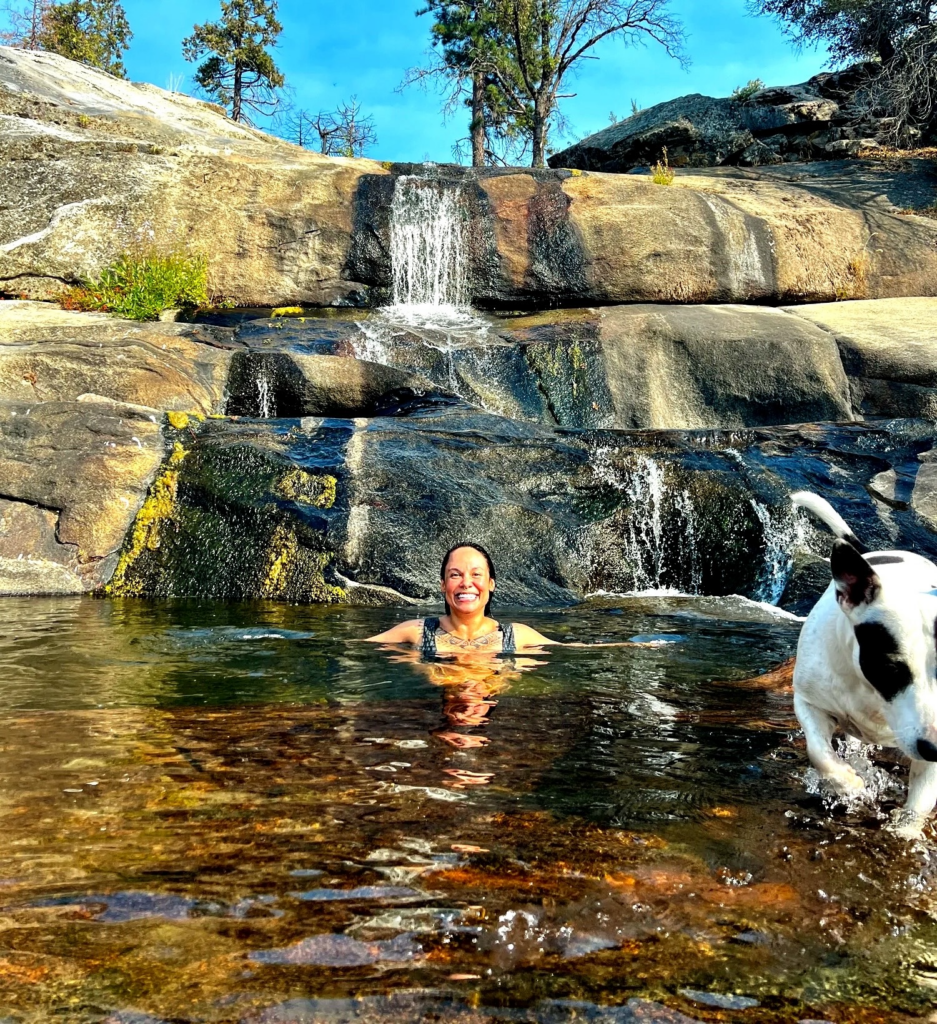
With the exception of Midway Lookout, campsites are thoughtfully placed around three large cascading waterfalls. These falls are absent from public maps and even many locals are unaware of them, which makes Musick Creek Falls a true hidden gem. Finding them without explicit directions is nearly impossible — and that is part of the magic. Sharing this land is vital to preserving the Sierra National Forest, keeping it undeveloped, and telling the story of Musick Creek Falls.
How far apart are the sites—will we see or hear other campers?
The sites are thoughtfully spaced to maximize privacy, but they are connected by trails and pathways throughout the property. Because the sites are on the smaller side, larger groups often book multiple sites — so you do not feel isolated, just tucked away. You may not run into another camper during your stay, but you might see a campfire glow or hear music drifting in the distance. We aim to create a private atmosphere and walk the line between being accommodating and respecting your space. After many years in the service industry, we have learned how to “read the room” — or the forest — so we are happy to chat and entertain or give you total solitude. If complete isolation is what you are after, the Upper 20 is completely untouched and rarely seen by anyone. We can pack your gear in on the Yota and pick it up when you radio us for an evac. The atmosphere out here is so serene that even more social campers often end up making lasting friendships. Once you have been here, this place tends to stick with you — and we always encourage past guests to stop by anytime they are in the area for a hike or picnic. Caring for the Sierra Nevada is a responsibility we all share.
What’s provided at each site (table, fire ring, grill, gazebo, hammock, etc.)?
Fire pits, picnic tables, gazebos, and shade, plus a spigot with delicious spring water flown in daily. In the shipping container, we have just about every camping item ever invented, so if you forget something or just did not have room (or did not want to buy something just to use once), let us know in advance and we will make sure your group has everything they need. So far, the most requested items are a power inverter with battery, cutlery, blankets, fire starter (which we thought was a lighter forever), lights, tents, cots, hammocks, solar showers, gold pan, coolers, telescope, walkie‑talkies, air‑mattress pump or patches, generator fuel filter, quantum flux capacitor, chain saw, firearms, booze, and dynamite. The last four items, however, were almost always denied due to safety concerns.
Do you have toilets and showers? (If not: what’s the setup?)
There is a composting outhouse, which is serviced religiously. Urine is diverted, and wood ash and cedar chips are dumped over solids and collected into sealed metal drums. Lye and organic matter are added, as well as some bacteria to speed up decomposition. A year or two later, the barrels are moved out of the watershed and humanure is spread over garden bins where all vegetables are donated to members of Congress that cannot afford to buy organic vegetables. Gravity‑fed running spring‑water spigots are located throughout camp should you wish to heat your own water to clean with. Bathing in the creek can be done as long as all cosmetics are reef safe. During the warmer months the water is nice to cool off, but it is brisk and does not replace a hot shower. This is the next amenity we want to add, and we are trying to figure out how to implement it without impacting the land or its inhabitants. If you have expertise in this area we would love to hear your design ideas or any input you may have.
Is drinking water available, and is it treated?
Yes. There is gravity‑fed spring water on tap throughout the camp. It is tested often, and it is the best water I have ever had. As clouds move in from the ocean and condense on the mountains, tributaries form, and the water runs through miles of ancient granite, giving it a high mineral content, high pH, and an amazing taste. This is truly day‑old water — good for you and great‑tasting. That is why we say it is flown in daily, and it has even received a good review from the environmental board.
Is there trash service, or is it pack-in/pack-out?
All garbage must make it into the trash. There is a garbage shed next to the shipping container and a recycling bin. Extra credit if you can separate your own recycling — a bin can be placed at your site upon request. FYI: all garbage, even gum wrappers, cigarette butts, bottle caps — all of it — must make it into the bin. Ninety‑nine percent of Hipcampers are pretty good at this, but I have never seen Shandie redder than when campers left a mess, and it scared me. You’ve been warned.
Off-grid reality check
Is there electricity or charging anywhere?
Me and Shandie make all our juice by running on a treadmill hooked up to an alternator, plus 800 watts of solar charging many portable Ryobi batteries, which can be plugged into small inverters to charge a laptop or air‑mattress pump. We also have a portable generator in a pinch, plus portable solar panels and solar generators. If you are struggling to power your 75‑inch flat screen, you may use our treadmill or the generator. The water that runs down this mountain flows through tunnels into several lakes, powering water turbines that make up the world’s largest hydroelectric undertaking to date, which powers most of LA today — so yes, there is electricity up here.
Can I run a generator?
The main rule here is the golden rule — if your generator is not bothering anyone, yes, you can run one. For example, operating a rattling 7,000‑watt Onan at 3 a.m. to charge a cell phone would not be okay. We find that most electrical requirements can be handled with some off‑grid experience and a few gadgets, which we will be glad to set up for you if needed.
Can I bring a portable power station or solar panels?
Absolutely — it is encouraged.
What lighting should I bring for night?
Due to near‑zero light pollution, Musick Creek gets very dark at night. With a full moon, visibility is quite good, but on darker nights headlamps and flashlights are critical, as well as a lantern for camp. Some trails and the bathroom are lit with low ground lights so as not to disrupt stargazers. At night the cosmos comes alive, reminding us how much is out there and how much more we have to discover.
Fires + wildfire safety
Are campfires allowed year-round?
Yes. We have taken every precaution and have been diligent to clear out all debris and potential fuel for wildfire. We have also installed a gravity‑fed spring box and ran plumbing throughout, not only for drinking water but for fire containment as well. We ask guests, especially during fire‑sensitive months, to not leave fires unattended and not to have blazes bigger than conditions permit safely.
Do you allow propane fire pits when wood fires are banned?
Propane cook stoves are permitted, but the firewood at Musick Creek is beautiful cedar that smells amazing and adds great flavor to food. Using some coals from the fire and tossing them into a BBQ or under a grill works better than propane, is safer, more sustainable, and creates the right kind of ambiance around meal time.
What’s your evacuation plan if a nearby wildfire starts?
There are three exits off the property and Highway 168 is less than seven minutes away. With CAL FIRE satellite imagery, we can watch any fires in the area. When California burns, this can be a safe place to get up and out of the smoke and heat — we are located at 4,800 ft and next to year‑round flowing water. It can be a safe haven for people who are sensitive to smoke.
Pets
Are dogs allowed off-leash?
Yes! Dogs enjoy their stays here immensely. While dogs do not have to have sophisticated manners, they cannot be dangerous to guests or other pets — i.e., no biters.
Are there wildlife hazards for pets (bears, rattlesnakes, etc.)?
We share this space with many of the Sierra Nevada’s star predators. The most threatening to pets would be some rather large birds of prey, which are capable of snatching up very small dogs. It has never happened here and I think it is rare, but it does happen. Next would be the Pacific rattlesnake, which I do come across fairly often. They are not interested in us or your pets in the least. They enjoy their privacy and can grow quite big. They are very beautiful and take on a spectacular green color. Bites are extremely rare and most bites are what is called a dry bite. Their venom is key to their survival and is costly to make. The pits in their skulls allow them to detect your size, and if you are not small enough to eat, then expending venom on you would be too wasteful. I have noticed with this particular species they are more likely to slither off without so much as a rattle. If one is cornered they will kindly ask for some space so they can leave you to your camping activities. There are bears as well, mostly coinciding with the bloom of the elderberries, which these majestic animals have been eating here for a millennia. If you stay up late enough you can spot them — they will walk the road through camp right past the garbage and straight to the elderberry bushes, eating hundreds of pounds in a sitting. Their appearance can be terrifying as the elderberries stain their faces and bodies blood red. These elderberries are delicious and play a key role in their survival, allowing them to put on weight and necessary calories before winter. Then they head up the mountain, spreading elderberry seeds in their poo. When they are in bloom you can see the ancient routes of elderberry bushes going up the mountain face in corridors in perfect symbiosis.
Swimming + water safety
Is swimming allowed, and how deep are the pools?
Absolutely. There are many swimming holes throughout the property, and many are several feet deep. To work on your backstroke, Shaver Lake is only about 7 minutes away and is well worth the drive — it is stunning and we ask everyone to at least see it. We have kayaks, fishing gear, and sometimes a ski boat.
Are there seasonal changes in water flow (spring runoff vs late summer)?
Yes — this place changes so much from season to season. If you came in spring and then again in late fall you might not recognize it. The landscape is ever‑evolving and always has something new. Every camper has a favorite time; mine is winter, and the falls are so strong they could move a school bus. There is fluctuation in the amount of water in the creek, but they are gushing pretty well all year. It never dries up, and the way the pools are set there is always water to swim.
Are the rocks slippery—what footwear do you recommend?
Yes. Wet rocks themselves are not too slick and can be walked on barefoot, but sometimes an algae can grow that is hard to spot with the naked eye, causing the rocks to become super slick and no footwear will keep you grounded. If you run into this, walking carefully back and forth and rubbing the algae off will return traction. Use extreme caution when walking near the water until you get your footing. Many people have slipped on the rocks here despite clear signs and warnings. No one has been seriously hurt, but we cannot emphasize this enough — please be careful when navigating the creek.
Is it safe for kids to swim here?
Many children of all ages and all walks of life love to swim here. It is not without its risks, though. Shaver Lake is just 7 minutes away and is extremely gorgeous — if you have never been, you really must see it. We have kayaks for you to borrow, and the sandy, shady beaches there make for excellent paddleboarding, swimming, snorkeling, fishing, rock diving, and more. It is one of the most beautiful lakes I have ever seen, with old‑growth sequoias bursting out of the shores, towering tall in the sky, and crystal‑clear visibility that makes Shaver magnificent.
Weather + seasons
What’s the best time of year to visit for waterfalls?
Beauty is in the eye of the beholder. Most would say spring and summer. The weather here is fickle, to say the least — temps can swing from 20 degrees to 70 in the same day, all times of year. I am from Montana and I think the climate is extremely kind in all seasons. Days are mostly sunny and warm. Nights are mostly chilly, as they should be. It is only when storms roll through that camping conditions are not ideal. The lightning and thunder up here are core‑crushing light shows of fiery plasma and sonic boom I have no words for. It is almost as if the mountain is about to demand payment for man’s debt.
How cold does it get at ~4,800 ft at night?
Most nights, even in summer, can get chilly — from the high 50s in summer to the low 20s in winter. It is always advised to bring long johns, hoodies, beanies, mittens, and warm socks. Fun usually stops if campers are cold. It is important to let everyone in your group know to dress warm and keep an eye on the weather. If you are freezing, let us know and we will remedy the situation.
Do you get snow, and are winter stays available?
Yes, and yes. Tent camping during winter months is not advisable unless you are outfitted for such adventures. My favorite time of year.
Rules + conservation vibe
Can we collect firewood, rocks, plants, or artifacts?
Musick Creek Falls sits on land that was sacred to the Native peoples of this region, including the Nüüm, Potuk, and Mono communities. During the 1850s, bounties were even paid by the American government for Native scalps — sometimes up to $20 per scalp, which is roughly $700–$800 in today’s money. Because of this deep and difficult history, we treat the land and anything found on it with respect. Arrowheads and mortar holes can still occasionally be found around the property. If you come across anything like this, please let us know so it can be documented and left where it belongs. After the Native communities were displaced, the area saw waves of gold prospectors, lumber operations, and even a steam engine rail line that once ran right through what is now the middle of camp. Every so often an old bottle, piece of metal, or relic from those eras makes its way to the surface. We provide firewood gathered from the property, so there is no need to forage for it yourself. There are many beautiful stones in the area, including pieces of rose quartz. Small stones can sometimes be kept as souvenirs, but please check with either Shandie or the host first. We also keep a collection of stones that we often give as gifts to campers who help support the conservation and stewardship of this land.
Can we play music, and how loud is too loud?
Again, the golden rule is the rule. The acoustics of the cliffs play a big role in how far music travels, and the waterfalls tend to buffer sound in and block sound out. We recommend that if you are getting the Led out, do a walk‑about to see how possibly annoying you are being to others. If you are unable to do this, we can gauge this for you.
Are drones allowed?
By all means. We would love some good footage, and at the moment would be willing to trade or purchase amazing drone video.
Nearby stuff
How far are you from Shaver Lake, stores, and gas?
Less than 10 minutes from Shaver Lake, stores, restaurants, and gas. Although in camp you feel deep in the country with zero light pollution and only the sights and sounds of nature.
What are the closest trailheads and best hikes nearby?
There really are too many to name here. There are some incredible hiking and rock‑climbing options right in camp.
What should we do if we want a day trip (Dinkey Creek, Bass Lake, Yosemite, etc.)?
I always recommend seeing Shaver Lake if you have never been — it is incredible. As far as day trips, there should be a section about the area on this website.
Photos + content
Can we take professional photos here (engagements, brand shoots)?
Yes. We welcome professional photography and love seeing Musick Creek Falls shared with the world. The Sierra Nevada is an incredibly beautiful and important landscape, and showcasing it helps remind people why these forests are worth protecting. We simply ask that all photo sessions respect the land and other campers. Please avoid disturbing wildlife, moving natural features, or blocking shared spaces for long periods of time. The conservation of these forests is a responsibility we all share, and thoughtful photography helps others see why places like this should remain wild and pristine for future generations.
Can we tag you on social media, and what hashtags do you like?
Please do. Use #musickcreekfalls and tag @musickcreekfalls. Social media links are in the header.
Message Board & Guest Book
Suggestions, tips, rants, conservation, camper photos, Sasquatch lore
Pin your note, upload a photo, and keep the adventure rolling.